 Dr. Telly Kamelia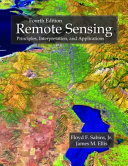
If you only need the buying answer
The current print listing for Remote Sensing is the strongest clean ownership price in this snapshot. The broader sampled new-print market is sitting much higher, so this is one of those cases where the print route is not just defensible educationally, but clearly favorable on price as well. If you need this book for actual GIS, geospatial, or environmental coursework, the present print copy is the one that makes the most sense.
| Format | Source | Price | |
|---|---|---|---|
| Paperback | Merybook | $61.07 | Check price |
| New print market | eBay | $99.95+ | Check price |
| New print market | Bookfinder market | $106.61+ | Check price |
The important point here is that the current print copy is not merely a little cheaper. It sits well below the surrounding new-print market. That makes ownership unusually easy to justify, especially for a book in a field where students often need to return to image interpretation, sensor concepts, spectral thinking, and spatial applications more than once.
What this book actually teaches
A serious remote-sensing text has to teach more than definitions. It helps students understand how electromagnetic energy interacts with land, water, vegetation, and built environments; how sensors collect data; how imagery is interpreted; and how remotely sensed information becomes useful for mapping, monitoring, and environmental decision-making. In other words, this is a methods-and-concepts book, not a book of isolated facts.
That matters because students who continue in GIS, earth science, environmental assessment, planning, or geospatial analysis often come back to these foundations. Remote sensing gets easier only when the learner begins to connect physics, imagery, classification, and real-world applications into one system. A retained print copy supports that kind of cumulative learning better than a temporary access model that disappears once the semester ends.
Who should buy print
Buy print if you expect to take more GIS, remote sensing, environmental, or geospatial courses after this one, or if you prefer working slowly through technical diagrams and concepts with notes in the margins. I would only hesitate if you know with certainty that this is a one-course requirement and you will never need the material again. Given the current price gap, though, print is the easy recommendation.