 Dr. Telly Kamelia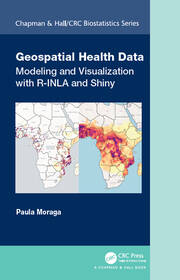
If you only need the buying answer, the 180-day eText is the cheapest route in the current snapshot. The hardcover still has a real case because it sits almost level with rental while staying well below the higher new-hardcover comparator, so ownership becomes sensible if geospatial modeling and visualization are likely to stay in your toolkit.
| Format | Seller | Current Price | Link |
|---|---|---|---|
| eTextbook 180 Days | eCampus | $48.84 | Check price |
| Quarter Rental | eCampus | $67.46 | Check price |
| Hardcover New | Merybook | $68.83 | Check price |
| Hardcover New | eCampus | $99.85 | Check price |
This is a genuine split decision. If your only goal is to get through a short methods window as cheaply as possible, the 180-day eText wins clearly. But once ownership sits almost on top of rental and well below the higher new-hardcover market, the decision shifts toward expected reuse rather than price alone.
What this book actually teaches
Geospatial Health Data: Modeling and Visualization with R-INLA and Shiny is a methods-and-workflow book, not a general public health survey. Its value lies in modeling logic, geospatial interpretation, and the structure of reproducible analysis workflows. Books like this often become more useful on the second and third pass, when a reader is trying to rebuild a model, adapt code, or remember how a visualization pipeline was organized.
That is why ownership still has a legitimate case even when short-term digital is cheaper. If these methods are likely to remain part of your work, a durable copy is easier to justify. If you only need one short project window, the cheaper eText remains the cleaner financial answer.
Who should buy print and who should not
Go digital if you only want the lowest short-term cost for one course or project. Buy print if you expect to keep using R-INLA, Shiny, or geospatial health workflows later and want a stable methods reference. In this market, digital wins short-term, while print becomes the better longer-horizon choice.