 Dr. Telly Kamelia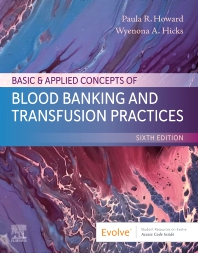
- Best value decision: the sampled $81.40 new print copy is the strongest buy if your program mainly uses the text itself, in-class case work, and printed end-of-chapter questions.
- Who should buy print: MLS and MLT students who expect to mark antibody-identification logic, revisit transfusion procedures, and keep the book for board-review season.
- Who should pause: students whose instructors require the Elsevier digital layer or Evolve-linked assignments as graded coursework.
- Main decision factor: this title is valuable as a physical study book, but a bundle-dependent section changes the real course cost.
- Price snapshot date: April 13, 2026
For most students shopping for Basic & Applied Concepts of Blood Banking and Transfusion Practices, the real question is not whether the sixth edition is legitimate. It is. The better question is whether the current print price is enough to solve the course, or whether your section is tied tightly enough to Elsevier’s digital layer that a lower-cost standalone copy stops being the whole answer.
Price comparison
| Store | Format | Condition | Price | Link |
|---|---|---|---|---|
| Merybook | New | $81.40 | Check listing | |
| Elsevier | New | $94.49 | Check listing | |
| Campus marketplace | Used | $87.12 | Check listing | |
| VitalSource | eTextbook | Lifetime | $88.99 | Check listing |
What the current pricing actually means
The price spread here is narrower than many students expect. The sampled new print copy is below the publisher’s new print and even below the sampled used-print marketplace number, while staying close to the lifetime eTextbook price. That matters because this is not a disposable survey text. Blood banking is one of the courses where students repeatedly go back over reaction logic, compatibility testing, component selection, and adverse transfusion pathways. A book like that often earns its shelf space.
The digital option is not wrong, but it is not obviously the stronger value either. If your program is using the text mainly as a study and lab-support book, print ownership makes academic sense. If your section is tied to Evolve-linked work or any instructor-specific digital requirement, then the cost comparison changes and the plain print price stops being the whole story.
What this book actually teaches
This text is useful because it does not treat immunohematology as a pile of isolated facts. Elsevier describes the sixth edition as combining scientific principles with practice tips and realistic laboratory experience. That is exactly what students need in blood bank. The course is difficult not because the vocabulary is exotic, but because every chapter asks students to connect mechanism, testing sequence, interpretation, and patient safety. A weak text leaves those as separate boxes. A good text makes them feel like one clinical line of reasoning.
The sixth edition is also more teachable than older versions in a practical sense. The move to full color is not cosmetic in this field. It helps with reaction grading, workflow diagrams, and the visual sorting that students do when they are first trying to make sense of antibodies, compatibility, and transfusion outcomes. The case studies and end-of-chapter questions matter too. They are where students stop passively reading and begin checking whether they can actually reason through a lab decision under pressure.
Why ownership can make more sense here than in other health-science texts
Some healthcare texts are easy to rent because they are mainly there to get you through one semester. Blood banking is different. Students often return to it in clinical rotations, certification review, and early job training because the logic is high stakes and easy to get rusty on. If you are the kind of learner who writes margin notes, maps antibody logic, or marks the pages that finally made a difficult concept click, a physical copy has real value beyond the semester clock.
I would be more cautious only if your instructor builds the course around publisher-assigned digital work. In that case, the issue is not whether print is helpful. It is whether print alone satisfies the course.
Who should buy this version, and who should not
Buy the print copy if you are in an MLS or MLT program that uses this book as a core blood-bank text and you expect to revisit it for certification review. Allen College’s 2025-2026 MLS textbook list, for example, assigns this sixth edition in the spring blood-bank sequence, which is exactly the kind of setting where ownership can pay off.
Pause before buying the standalone copy if your syllabus explicitly requires Elsevier digital components. For those sections, the cheaper print route may still be academically useful, but it may not be the complete purchasing answer.
This is not a casual buy for every student. If you are only trying to survive a short requirement and know your study habits are entirely digital, the lifetime eTextbook may be the cleaner choice even if the sticker price looks similar.
Bottom line
Basic & Applied Concepts of Blood Banking and Transfusion Practices is the kind of technical text that often justifies ownership because students use it as a reasoning tool, not just a reading assignment. At the sampled prices, the $81.40 print copy is the strongest value if your course is centered on the book itself, lab cases, and printed study work. If your program ties grades to Elsevier’s digital layer, check that first. In this title, the smartest purchase is the one that matches how the course is actually taught.
- VitalSource listing for the 6th edition eTextbook
- CampusBooks marketplace snapshot for print copies
- Allen College MLS textbook list showing the 6th edition assigned in blood bank
- Elsevier product description and current marketplace pricing checked on April 13, 2026