 Dr. Telly Kamelia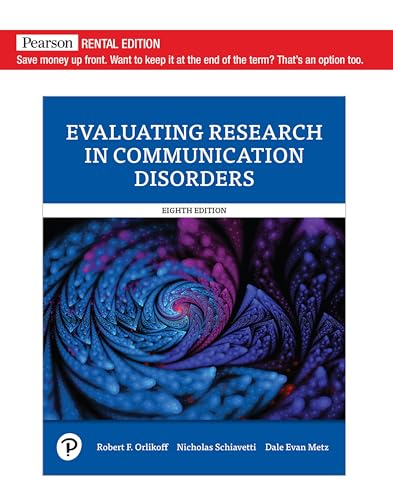
If you only need the buying answer, the current print listing is not the budget winner. Pearson print, rental, and the sampled new-print market all come in lower, so ownership only makes sense here if you expect the book to stay useful for later evidence-based practice work.
| Format | Seller | Current Price | Link |
|---|---|---|---|
| Paperback New | BookFinder marketplace | $73.51 | Check price |
| Pearson Print | Pearson | $84.99 | Check price |
| Rental | Pearson / eCampus | $84.99 | Check price |
| Pearson+ Lifetime | Pearson | $89.94 | Check price |
| Print New | Merybook | $137.53 | Check price |
This is exactly the sort of post that should not flatter print when the market does not support it. The current print listing is above every major alternative in the table. That means the only honest argument for paying more is long-term utility, not immediate value. If your goal is simply to get through a methods course at a reasonable price, the current print route is hard to defend.
What this book actually teaches
Evaluating Research in Communication Disorders trains students to read clinical research carefully rather than passively. It deals with research design, methods, statistical reasoning, interpretation of evidence, and the translation of findings into evidence-based practice decisions in communication sciences and disorders. That makes it genuinely useful intellectually, even if the current print market is weak.
The point is that academic value and purchase value are not always the same thing. A reusable methods book can still be worth keeping in some cases, especially for students moving toward clinic-facing evidence work. But if you are buying strictly on price right now, the cheaper Pearson and marketplace routes are stronger than the current print listing.
Who should buy print and who should not
Skip the current print listing if you only need one research-methods course and want the cleanest value route. Consider ownership only if you know you annotate heavily and expect to revisit research-evaluation logic in later speech-language pathology, audiology, or evidence-based practice work. In this snapshot, print is a reuse decision, not a bargain decision.