 Dr. Telly Kamelia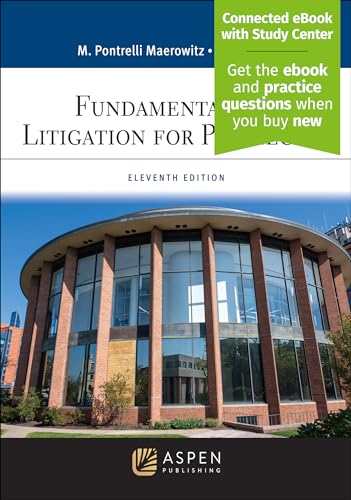
If you only need the buying answer, Aspen’s Connected eBook with Study Center is slightly cheaper than the current hardcover. The print copy still has a strong case because the price gap is modest and litigation procedure books often become much more useful once readers start revisiting workflow, forms, timing, and filing logic.
| Format | Seller | Current Price | Link |
|---|---|---|---|
| Connected eBook with Study Center | Aspen Publishing | $87.00 | Check price |
| Hardcover New | Merybook | $96.78 | Check price |
| eBook + Study Center + Audiobook | Aspen Publishing | $121.00 | Check price |
| Connected eBook + Hardcover | Aspen Publishing | $241.95 | Check price |
This is another nuanced decision. The digital-only Study Center path is the cheapest publisher-managed option, so it deserves serious consideration if the course relies on Aspen tools. But the hardcover is only modestly higher, and litigation procedure books often reward repeated reference use. That means the better route depends less on the sticker price and more on how the course is structured.
What this book actually teaches
Fundamentals of Litigation for Paralegals is valuable when it helps readers understand how a case actually moves. Its usefulness comes from procedure, timing, filing logic, forms, and the practical rhythm of litigation work rather than from abstract legal vocabulary alone. That is why it can remain helpful after the first course, especially for students moving into real litigation support tasks.
That procedural shelf life is the reason print still has a case even when digital is slightly cheaper. If the course is tool-driven and assignment-focused, Aspen’s digital route may be enough. If the book is expected to function as a reusable procedural reference, the hardcover is still easy to justify.
Who should buy print and who should not
Go digital first if the course requires Aspen tools or you only want the lowest publisher-managed price. Buy the hardcover if the course is book-centered and you want a reusable litigation reference you can keep marking up. In this market, digital wins narrowly on price, while print wins on long-term procedural usefulness.