 Dr. Telly Kamelia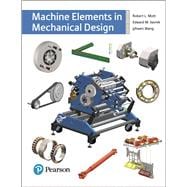
Mechanical-design books are not read like general textbooks. They are worked, revisited, and mined for equations, assumptions, and component logic long after the first pass through the chapter. That is why the buying question for ISBN 9780134441184 is not just about immediate cost. It is about whether you need six months of access or a mechanical-design reference you may still reach for when shafts, bearings, gears, springs, and fasteners return later in the curriculum.
If you only need the buying answer
The cheapest short-term route is clearly Pearson+ digital access at about $54.96 for 180 days. If you only need this book for one term, digital wins on price. But the current new print listing at $115.20 is still lower than marketplace print at $117.87, far lower than the sampled new-print market at $291.84, and even lower than quarter rental at $158.39. So the honest verdict is this: digital is best for short-term budget control, while print is the stronger ownership route for anyone who expects to reuse machine-elements material later.
Price comparison
| Store | Format | Condition | Price | Link |
|---|---|---|---|---|
| Merybook | Paperback | New | $115.20 | Check price |
| Pearson+ | eTextbook | 180 days | $54.96 | Check digital option |
| eCampus | Marketplace | Varies | $117.87 | Check marketplace |
| eCampus | Quarter rental | Rental | $158.39 | Check rental option |
| eCampus | Paperback | New | $291.84 | Check new market |
What this price means in practice
This is not a case where rental is quietly better than ownership. Rental is actually the expensive middle ground. If you want temporary access only, digital is the clear winner. If you want ownership, the current print listing is already a clean and competitive print route. That leaves very little reason to choose rental unless the course structure forces a short-term decision and you strongly dislike digital.
I would frame the choice this way: buy digital if your horizon is one semester, buy print if your horizon is an engineering education.
What this book actually teaches
Machine Elements in Mechanical Design teaches the logic that connects forces, stress, fatigue, and component selection to real design choices. Good students do not merely memorize formulas from a book like this. They learn how the book organizes design thinking across shafts, keys, bearings, gears, springs, threaded fasteners, and other standard machine elements.
That matters because later engineering work tends to assume that this design language is already available in your head. The strongest students usually keep a book like this not because every page is reread, but because certain chapters keep becoming useful again. When that happens, a marked-up print copy is often more helpful than reopening a temporary digital license that may already be gone.
Who should buy digital, and who should buy print
Choose digital if this is purely a one-course requirement and the priority is minimizing cost. That is the cheapest honest answer here.
Choose print if you expect machine design to matter again in later design, manufacturing, systems, or project work. In that case, the current print listing is strong enough to justify ownership.
Sources checked
Sources checked: Merybook listing search for ISBN 9780134441184, Pearson+ digital pricing, and eCampus new, marketplace, and rental pricing. Pricing reviewed April 19, 2026.